
Managed PostgreSQL Built for AI
Production databases on AWS, with built-in AI support for provisioning, monitoring, backups, and scaling through MCP servers. No DevOps team required.
Zero to production database
AI-native infrastructure management
Your AWS, our management
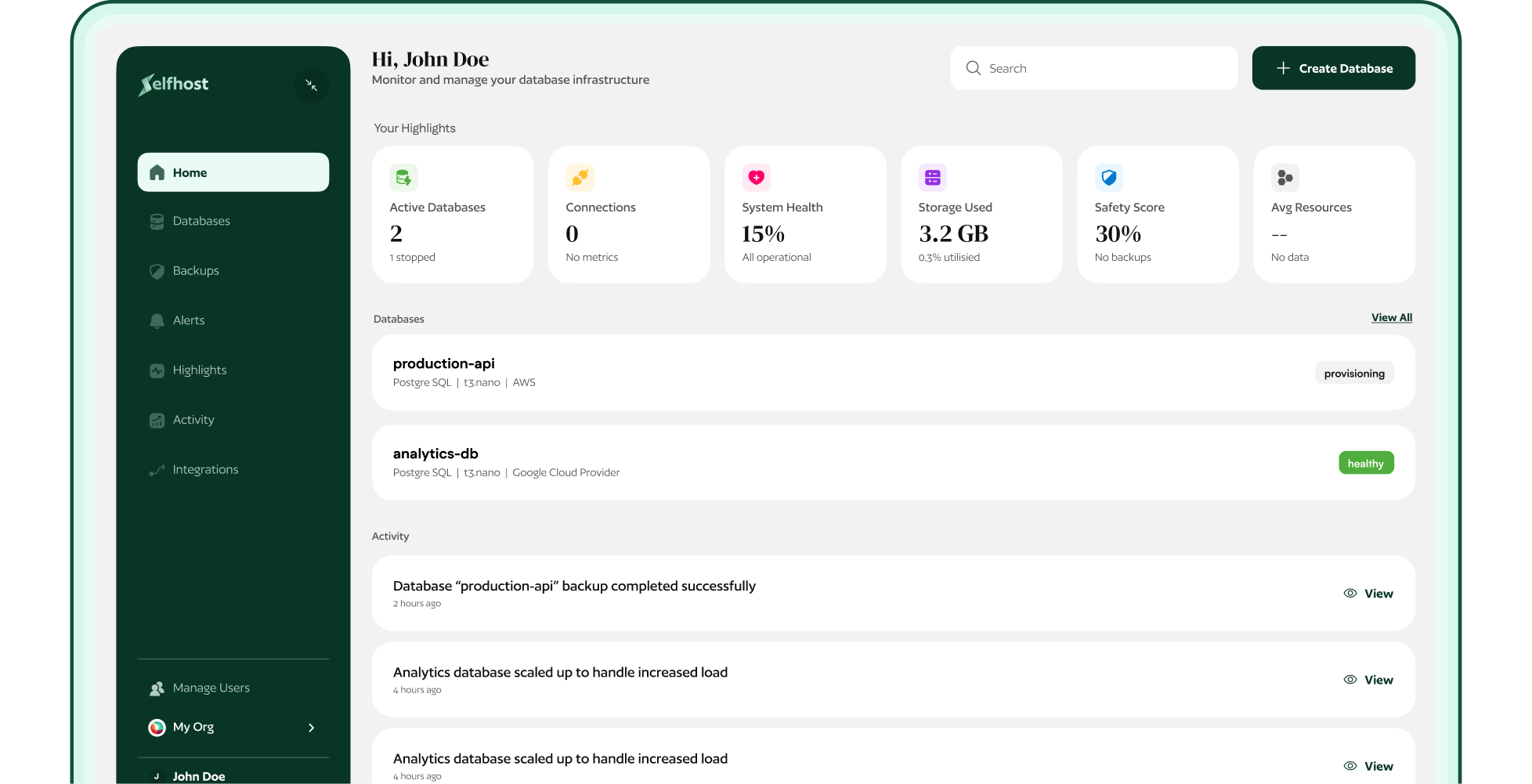
The unified dashboard
Your databases. One view. Real-time.
Automated Backups
Point-in-time recovery enabled for every instance
Cut costs up to 60%
Hosting costs gets reduced without compromise
Zero Downtime
Rolling updates and patches with no service gaps
24/7 Monitoring
Real-time health checks and automated alerting
Built for production.
Not just demos.
76 tools. From your IDE.
Provision, scale, backup, monitor, configure - all through Claude, Cursor, or VS Code. Natural language, no context switching. The only AI-native database management in the market.
Explore nowReady in under 2 mins
Choose your instance, pick PostgreSQL 16-18, hit deploy. VPC, security groups, backups, monitoring, connection pooling, all configured automatically on AWS EC2.
Deploy for freeYour cloud. Our management.
Databases run in your own AWS account. You own the infrastructure. We handle provisioning, monitoring, backups, scaling, and alerts. 30% of managed price per database. Requires Pro tier ($79/mo).
No sales calls. No waiting.
Launch one with MCP in under 30 seconds.
Deploy across regions
30+ AWS regions worldwide for lower latency and higher reliability.

Real-time monitoring
Get continuous visibility into performance, usage, and system health in real time.

Lowest Costs
Predictable and low, without hidden charges or scaling penalties.
SelfHost provisions and manages in our cloud.
How we compare.
| SelfHost | Digital Ocean | Neon | RDS | |
|---|---|---|---|---|
| 2 GB Postgres | $22 | $30 | $69 | $37 |
| AI management | 76 tools | - | - | - |
| BYOC | $79/mo | - | - | DIY |
| Provisioning | <2 min | ~5 min | ~1 min | ~15 min |
| Team members | Unlimited | Limited | Per-seat | IAM |
Complete operational visibility
Across your databases.
Performance Monitoring
Track CPU, memory, disk I/O, latency, and throughput in real time to understand how your databases perform under load
Explore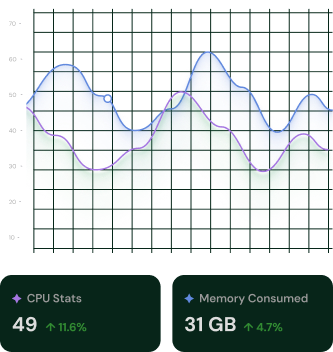
| Instance | Status | Latency |
|---|---|---|
| prod-db-01 | STABLE | 1.2 ms |
| replica-prod | STABLE | 0.8 ms |
| app-uat-02 | PEAK | 4.5 ms |
| app-uat-01 | PEAK | 4.1 ms |
| web-prod-db | STABLE | 2.3 ms |
| web-uat-db | HIGH | 9.3 ms |
 Success 0
  Warning 0
  Error 0
  Total 0
Smart insight for you
Infrastructure health has improved by 12% compared to last week.
Also, no critical errors detected in the past 27 hours.
Operational Status
Track database events like provisioning, scaling, backups, configuration changes, and user actions from a centralised activity timeline.
ExploreInstance & Deployment Visibility
Know which instances are running, pending, or stopped across regions and cloud providers.
Explore Instances running 0
  Instances halted 0 Errors 0
  Operations queued 0
 System Health Overview
Instant visibility into overall database and infrastructure health so you can catch issues before they impact applications.
Backup & Recovery Status
See backup coverage, snapshot history, and recovery readiness at a glance so your data is always protected.
 Restoration Completed
 auth-prod-cluster
Instance ID: i-359uhoi343fds34
Storage Capacity & Insights
Monitor storage consumption and growth trends to plan scaling without over-provisioning.
Incident Detection
Know about issues before users do. Proactive monitoring and smart alerts help detect anomalies, performance bottlenecks, and risks before they impact applications.
High CPU

rises above set condition
Find out why people
love us.

I've spent years writing Terraform scripts and debugging CloudFormation templates just to get databases running properly. SelfHost basically replaced two weeks of implementation work with a 10-minute setup. The Multi-AZ configuration that used to take me days of testing just... works out of the box.

FIS
SelfHost is the first database tool where I didn't need to bug our infrastructure team every other day. Spun up a production database for our ML pipeline in literally 3 minutes. The real-time metrics are actually useful, I can see when my batch jobs are hammering the database and adjust accordingly.

Tailwyndz LLC
From a product perspective, SelfHost solved a bottleneck I didn't realise we had. Our engineering team used to spend 15-20% of sprint capacity on database operations - scaling, backup verification, incident response. That's now close to zero. If SelfHost disappeared tomorrow (no offense), our databases would still be there. That's rare and it matters for long-term planning.

ZOOP